Inland Spain as an Investment Hot-spot.
By Zoe Dare Hall
For the more obvious trappings of lifestyle luxury, buyers head to the Costa del Sol’s high-net-worth hubs such as Marbella, where modern mansions and supercars are part of the package that denotes wealth and success.
With Spain leading Europe in economic growth – a trajectory that began in 2021 and is set to continue, with the IMF forecasting 2.3% growth in 2026 – the country provides fertile ground for inward investment too.
But as the world’s tectonic plates judder from the ripple effect of conflict in the Middle East, many wealthy buyers are prizing something different. They are seeking sustainable – in some cases entirely energy autonomous - sanctuaries that provide privacy, security and space. They want private hideaways that offer authentic character and a close connection with nature, such as Cortijo las Majas , a large hunting lodge-style property in the Granada hinterland whose 280-hectare (690-acre) fiefdom includes its own mountain populated by wild boar and Iberian Ibex. At €1.5m, it’s the price of a moderate villa in Marbella.
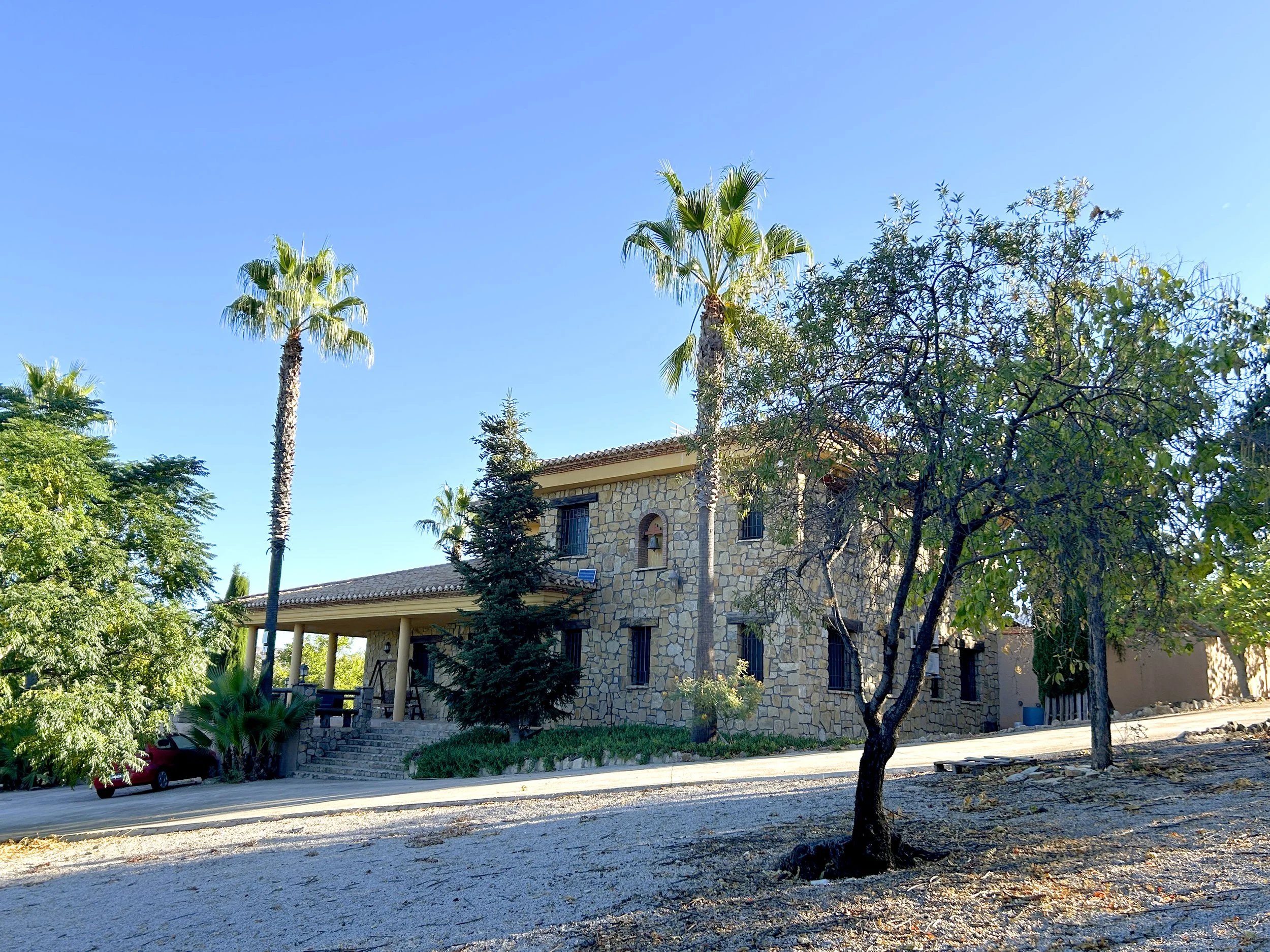
Inland Andalucia has traditionally been overshadowed by the fast-paced property markets of the coast, where new-build development is booming once again. But for buyers looking for natural beauty, authenticity and relative seclusion, the region’s rural landscapes provide many under the radar opportunities to acquire estates at prices that are attractive – and rising. Official figures show that overseas buyers in Andalucia are paying 42% more per square metre than directly before the pandemic.
Andalucia’s property sales figures in the last year suggest a behavioural shift is taking place when it comes to evaluating the relative benefits of coast versus countryside. Transactions in Granada province – most of which, apart from the stretch of Mediterranean coast between La Herradura and La Rábita, is inland – were up by 20% in 2025, according to the House Ministry (GOV) and National Institute of Statistics (INE). Conversely, in the same time period, sales in Málaga province – where the vast majority of sales to foreign buyers are on the coast – transaction numbers fell by nearly 5%.
Beyond the lifestyle preferences that have become entrenched since the Covid pandemic – including the growth in remote working, the desire for immersion in nature and a preference for the authentic and experiential over the ostentatiously material – inland investments feed the growing appetite for eco-tourism.
Spain’s eco-tourism market – a sector that has found a particular fanbase among millennials, who favour curated travel experiences - is predicted to grow from US$3.9bn in 2025 to US$10bn by 2034.
Inland Andalucia lends itself to eco-tourism, with untouched natural landscapes that take in mountain peaks, deserts and rolling sierras. Among its most popular inland tourism zones is the Sierras Subbéticas Natural Park, a vast expanse of rugged wilderness between Granada and Córdoba. Investment opportunities include Hacienda Minerva , a boutique country house hotel with its own bodega, events space and Arabic baths near Zuheros, a mountain village that is considered a model of sustainable rural tourism.
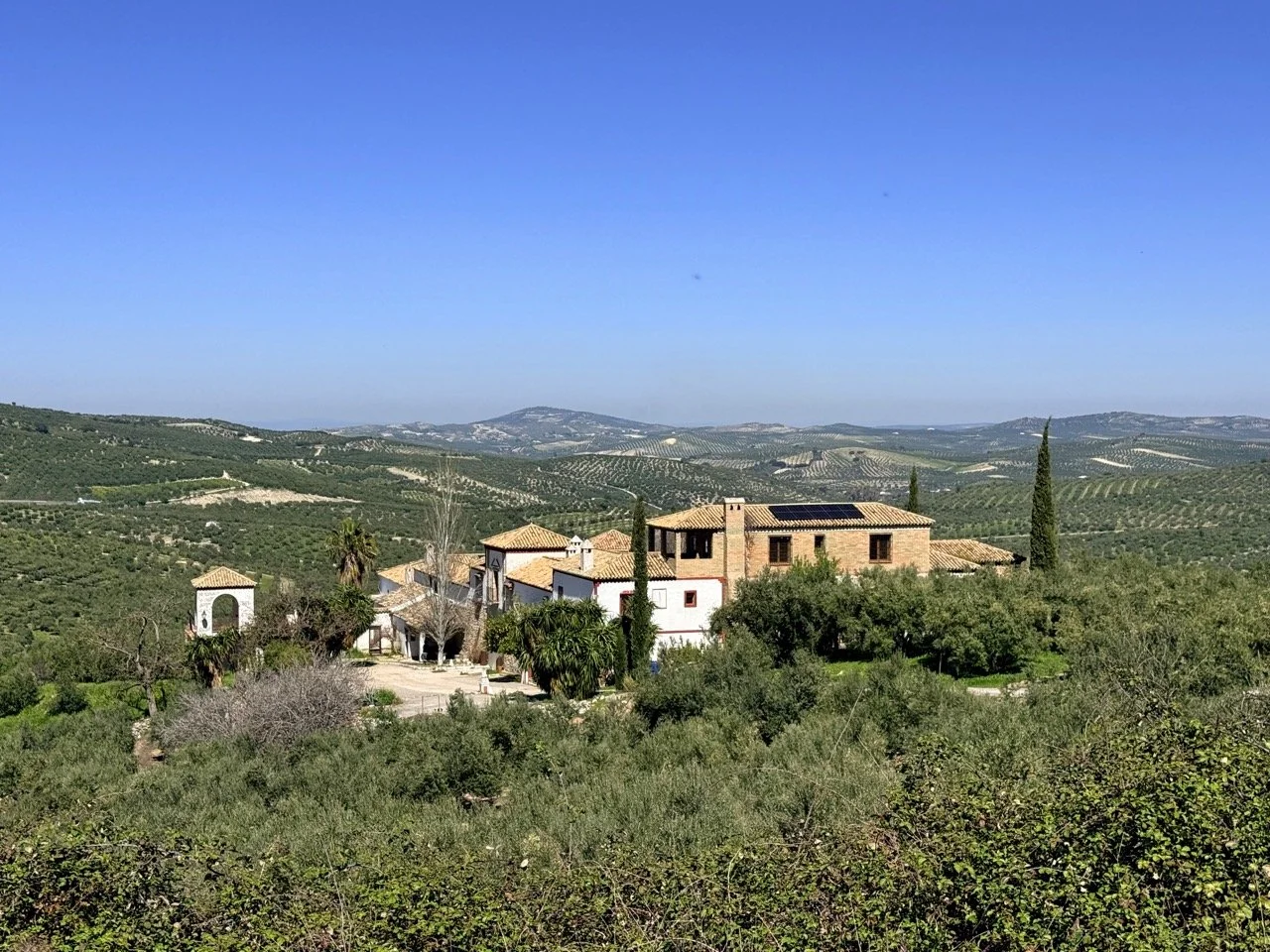
Such off-grid locations lend themselves perfectly, too, to environmentally-conscious living, an area in which Spain is leading the way with more than half of electricity generated from natural sources – notably wind power – and more than 70% of its electricity generated in 2025 emission-free, according to the Renewable Energy Institute.
But rural seclusion needn’t mean impractical isolation. Being within an hour or so’s drive of major cities such as Málaga or Granada, and to their international airports, cultural life, universities or beaches, makes hybrid work lives, commuting and raising a family an entirely feasible part of the picture. That relative proximity also adds intrinsic value to the property.
Growing opposition to tourism in cities further adds to the appeal of rural locations. For several decades, Spain has relied on, and thrived from, tourism, with last year seeing a new record of 96.8m international visitors. But with cities such as Málaga clamping down on short lets in an attempt to curb local property price inflation, tourists’ and property investors’ gaze will naturally be drawn to less populated areas where no such tension exists.
AirBnB – not just a company but a metonym for holiday lets everywhere – is spotting the opportunity, investing US$50m into promoting Spanish villages to help inland Spain to have the same allure as rural Provence or Tuscany. The Spanish Government has also announced a €1.2bn plan to redirect 10% of international tourists inland by 2028 by investing in rural heritage, nature and infrastructure.
Investing in inland Spain comes with social value too. As the BBC’s BAFTA-award nominated travel/renovation series Amanda and Alan’s Spanish Job shows, buying and renovating old houses in depopulating rural towns and villages brings new life and prospects. This TV spotlight on rural Moclin, a tiny town with an ageing population 35 minutes’ drive from Granada, lead to a stratospheric increase in the number of property searches on Rightmove for Moclín and the wider region, which in turn has lead to property sales and the opening of new bars and businesses.
Any property purchase, whatever the budget, invariably involves a degree of compromise. But with a compelling lifestyle offering along with strong investment and often income-earning potential, inland Andalucia may be the place to strike the perfect balance.
Zoe Dare Hall is an award-winning freelance journalist, specialising in global property. For more than 20 years, Zoe has written extensively for international publications, including The Times and Sunday Times, The Financial Times and the Telegraph. Her writing has taken her around the world and she owns a property in the hills above Marbella, so shares a deep love of all things Spanish.